19 Oct 2026
Tracing Regulatory Impacts on Nookspin Deployment Worldwide
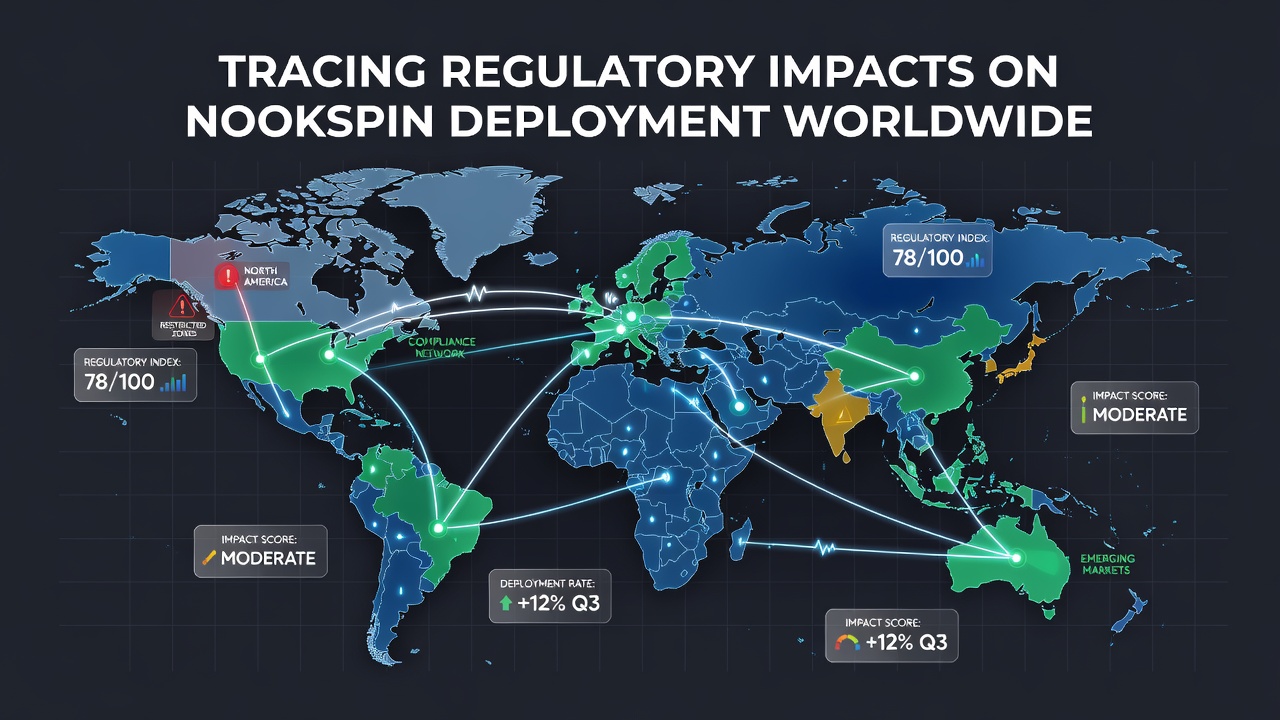
Regulatory frameworks shape how Nookspin systems reach markets across continents, and observers track these shifts through agency filings and compliance updates that stretch from Brussels to Canberra. Data from multiple oversight bodies show that certification timelines vary sharply by region, while product standards for electromagnetic compatibility and safety testing create layered approval processes that manufacturers must navigate before any large-scale rollout begins.
European Union Certification Pathways
The European Commission maintains detailed directives on electronic equipment that directly influence Nookspin integration into commercial networks, and companies often complete conformity assessments under the Radio Equipment Directive before distribution expands. Research indicates that updates to harmonized standards in 2025 extended testing requirements for wireless modules, which in turn lengthened lead times for firms seeking market access in member states. Those who monitor these changes note that national variations still exist alongside the overarching EU rules, particularly in areas such as environmental compliance and end-of-life recycling mandates.
One study released by an industry research group revealed that average approval durations in the EU now average 14 to 18 months for complex devices like Nookspin units when additional audits are triggered. Figures from trade associations further illustrate how smaller operators face higher relative costs during these reviews compared with established suppliers.
North American Regulatory Landscape
Across the United States and Canada, agencies such as the Federal Communications Commission and Innovation, Science and Economic Development Canada enforce spectrum allocation rules and product labeling standards that apply to Nookspin deployments. Reports compiled by government statisticians demonstrate that equipment must satisfy specific emission limits before import or sale proceeds, and recent policy adjustments have emphasized cybersecurity documentation as part of the review package.
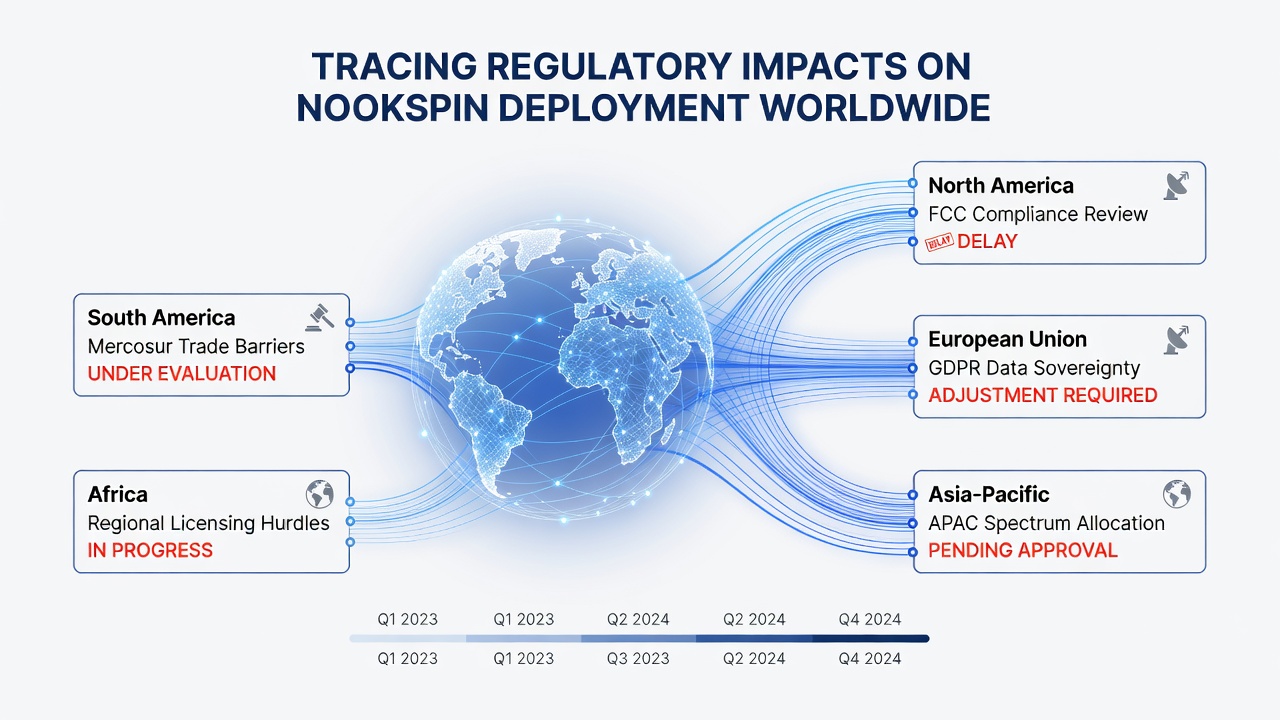
Canadian authorities published guidance in early 2026 that aligns more closely with U.S. practices on modular approvals, allowing certain components to receive pre-clearance and thereby reducing duplicate testing for multi-market products. Observers note that this coordination has produced measurable reductions in duplicate filings, though full mutual recognition remains incomplete. Data from border agencies show steady increases in Nookspin-related shipments once initial certifications clear both jurisdictions.
Asia-Pacific and Australian Requirements
Australia's communications regulator, the Australian Communications and Media Authority, sets mandatory standards for radio communications devices that cover Nookspin hardware, and compliance often involves local testing or accredited overseas laboratories. Research from academic institutions in the region indicates that environmental labeling rules also intersect with these technical requirements, adding another layer for exporters. In parallel, several Southeast Asian markets have introduced updated import protocols that reference international standards while maintaining country-specific documentation demands.
Industry reports highlight that operators who align product designs with multiple regional specifications early in development encounter fewer delays when scaling across borders. Evidence from trade data demonstrates that coordinated compliance strategies correlate with faster deployment schedules in these markets.
Upcoming Changes in October 2026
Multiple jurisdictions have signaled that revised technical regulations will take effect in October 2026, particularly those addressing updated safety thresholds and interoperability testing for networked devices. Government notices from North American and European sources outline phased implementation timelines that require manufacturers to submit revised test reports for legacy models still in circulation. Those tracking the schedule report that advance preparation has already begun among larger suppliers, while smaller entities continue to assess resource allocation for the transition.
Statistics released by international standards organizations reveal that similar past updates produced temporary slowdowns in new deployments followed by accelerated adoption once certifications stabilized. The pattern suggests that firms maintaining active dialogue with regulators experience smoother transitions during these windows.
Conclusion
Worldwide deployment of Nookspin technology continues to reflect the cumulative effect of regional regulatory systems that balance safety, spectrum management, and market access. Information compiled from agency databases and compliance trackers shows ongoing adaptation by manufacturers as standards evolve, and the October 2026 milestones represent the next significant checkpoint in this process. Organizations that monitor filings across jurisdictions maintain clearer visibility into deployment timelines and associated requirements.